A manmade timeless feature of Hawaiʻi are the sturdy, elegant rock walls that weave across pastures and define ancient coastal sites. These dry stack stone walls, both functional and,

Dated: September 10 2025
Views: 36
A manmade timeless feature of Hawaiʻi are the sturdy, elegant rock walls that weave across pastures and define ancient coastal sites. These dry stack stone walls, both functional and beautiful, have long been part of the islands’ landscapes, keeping cattle in check, marking boundaries, and standing as quiet testaments to craft and endurance.
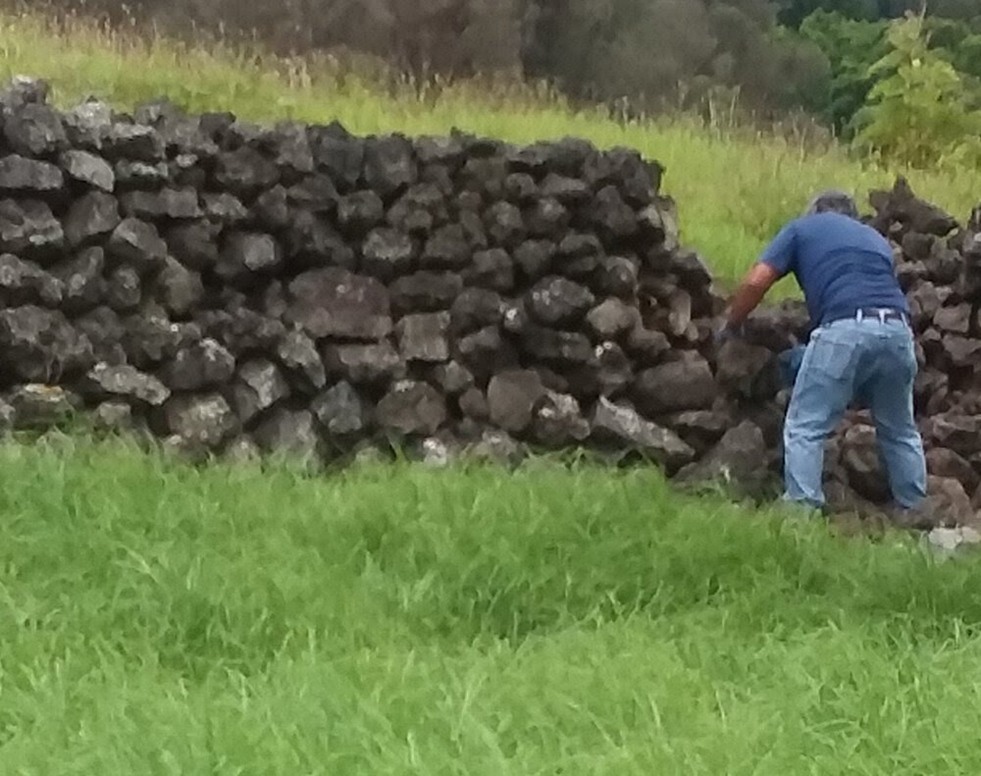
In Hawaiian, they are called ʻuhau huma pōhaku. Their foundations begin with large stones, set about half a foot into the ground. I once watched a stone mason at work on my property. It was mesmerizing to see him hand-select rocks of every shape, fitting them together like a living puzzle, each piece rising from the solid base. The two exterior faces of the wall are called kululu, and smaller stones are carefully wedged between the larger ones, locking everything into place.
These walls—stretching for miles across the islands—were built to withstand the test of time without mortar. A skilled mason works with patience, turning and twisting each stone until it settles into its rightful spot. The process feels almost meditative, guided by listening as much as by seeing.
Cemented rock walls, by contrast, reveal their mortar seams. They may be sturdy, but they lack the quiet poetry of dry stack. The beauty of the ʻuhau huma pōhaku lies in the way each stone speaks to its neighbors, forming strength through harmony.
I was told that ancient walls are recognizable by their great cornerstones. In the rugged lava fields of La Perouse, along the South Maui coast, remnants of these old walls still endure—anchored by their massive corners, silent monuments to the hands that placed them.
Across cultures, stones are regarded as sacred. Standing among these walls, I too feel a deep awe—grateful for the enduring beauty of the pōhaku that grace our land.A manmade yet timeless feature of Hawaiʻi are the sturdy, elegant rock walls that weave across pastures and define ancient coastal sites. These dry stack stone walls, both functional and beautiful, have long been part of the islands’ landscapes—keeping cattle in check, marking boundaries, and standing as quiet testaments to craft and endurance.
In Hawaiian, they are called ʻuhau huma pōhaku. Their foundations begin with large stones, set about half a foot into the ground. I once watched a stone mason at work on my property. It was mesmerizing to see him hand-select rocks of every shape, fitting them together like a living puzzle, each piece rising from the solid base. The two exterior faces of the wall are called kululu, and smaller stones are carefully wedged between the larger ones, locking everything into place.
These walls—stretching for miles across the islands—were built to withstand the test of time without mortar. A skilled mason works with patience, turning and twisting each stone until it settles into its rightful spot. The process feels almost meditative, guided by listening as much as by seeing.
Cemented rock walls, by contrast, reveal their mortar seams. They may be sturdy, but they lack the quiet poetry of dry stack. The beauty of the ʻuhau huma pōhaku lies in the way each stone speaks to its neighbors, forming strength through harmony.
I was told that ancient walls are recognizable by their great cornerstones. In the rugged lava fields of La Perouse, along the South Maui coast, remnants of these old walls still endure—anchored by their massive corners, silent monuments to the hands that placed them.
Across cultures, stones are regarded as sacred. Standing among these walls, I too feel a deep awe—grateful for the enduring beauty of the pōhaku that grace our land.

Guided by a “client-first” philosophy and a win–win mindset, Cherie has successfully represented both buyers and sellers in transactions ranging from vacant land to residential properties and co....
A manmade timeless feature of Hawaiʻi are the sturdy, elegant rock walls that weave across pastures and define ancient coastal sites. These dry stack stone walls, both functional and,
The island of Maui, while only 728 square miles, has an amazing variety of micro climates. The major climates that make up Maui are the desert areas, rain forests and mountainous regions. Within
 REALTORS® Association of Maui, Inc. All information deemed reliable but not guaranteed. All properties are subject to prior sale, change or withdrawal. Neither listing broker(s) or information provider(s) shall be responsible for any typographical errors, misinformation, misprints and shall be held totally harmless. Listing(s) information is provided for consumer's personal, non-commercial use and may not be used for any purpose other than to identify prospective properties consumers may be interested
in purchasing. The data relating to real estate for sale on this website comes in part from the Internet Data Exchange program of the Multiple Listing Service. Real estate listings held by brokerage firms other than REMAX Hawaii Maui may be marked with the Internet Data Exchange logo and detailed information about those properties will include the name of the listing broker(s) when required by the MLS. Copyright ©2026 All rights reserved.
Last Updated: September 20, 2026 11:42 PM UTC
Show More...
REALTORS® Association of Maui, Inc. All information deemed reliable but not guaranteed. All properties are subject to prior sale, change or withdrawal. Neither listing broker(s) or information provider(s) shall be responsible for any typographical errors, misinformation, misprints and shall be held totally harmless. Listing(s) information is provided for consumer's personal, non-commercial use and may not be used for any purpose other than to identify prospective properties consumers may be interested
in purchasing. The data relating to real estate for sale on this website comes in part from the Internet Data Exchange program of the Multiple Listing Service. Real estate listings held by brokerage firms other than REMAX Hawaii Maui may be marked with the Internet Data Exchange logo and detailed information about those properties will include the name of the listing broker(s) when required by the MLS. Copyright ©2026 All rights reserved.
Last Updated: September 20, 2026 11:42 PM UTC
Show More...
